
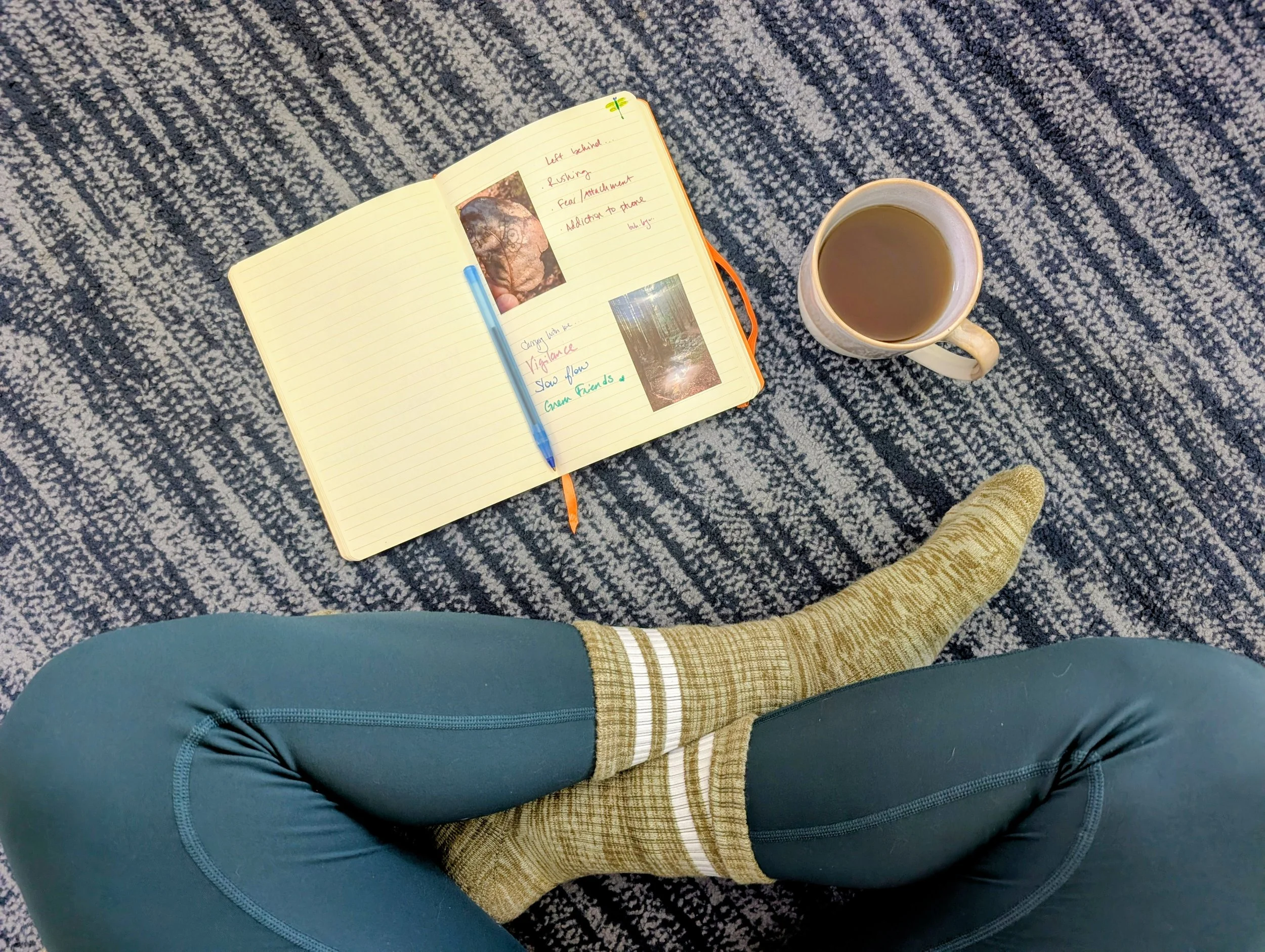
(Inspired by Linnea Passaler’s book Heal Your Nervous System)
There’s a certain kind of exhaustion that sleep alone doesn’t fix.
The kind where your body feels overstimulated and under-supported all at once. Where your mind is tired, but your body won’t fully relax or settle. Where even healing itself can start to feel like another chore.
As I’ve been reading Heal Your Nervous System by Linnea Passaler, one thing that keeps standing out to me is this: before deep healing work begins, the body and the nervous system often needs evidence that it is safe enough to settle.
Not perfect. Not fully healed. Just supported.
And one of the ways we begin creating that support is through gentle daily structure.
Not rigid routines. Not hyper-optimized wellness schedules. But rhythms, sensory nourishment, and enough predictability for the body to exhale a little. Small habits that help the body feel more regulated over time.
I think many of us underestimate how much sensory information our nervous systems process all day long. Noise, light, screens, stress, rushing, multitasking, emotional labor, clutter, notifications, blood sugar crashes, shallow breathing, poor sleep, constant stimulation. Modern life asks a lot of the human nervous system. And our bodies weren’t designed for this onslaught.
So instead of only asking, “What’s wrong with me?” I’ve been more interested lately in asking:
How can I help my body feel more settled and safe? (In little, easy, actionable ways…)
Before jumping into the deeper steps of Passaler’s healing framework, I wanted to pause here first. Because building a nervous system-friendly life may actually start with creating small, repeatable moments of safety in the body. It doesn’t have to be dramatic. You are probably already doing some of the following. As you read on, consider routines or habits that are already aligned with these suggestions and any improvements you can make to those before you start adding new things to try.
Here are some of the daily sensory and lifestyle supports I’ve been thinking about and adjusting lately.
🌀 Vestibular Input: The Nervous System Loves Gentle Movement

Bishop Peak trail view of Madonna mountain spring green
The vestibular system helps the body orient to balance, motion, and spatial awareness. Interestingly, many forms of rhythmic movement are naturally regulating to the nervous system. Not so surprising to those who love movement already.
Think about how instinctively babies love rocking, swaying, bouncing, and being carried.
Adults often need that sensory input too.
Walking, hiking, dancing in the kitchen, slow yoga flows, swinging with your kids at the park, rocking in a chair, floating in water, balancing barefoot in the grass — these all provide vestibular input that can help the body settle and orient.
Movement is not only exercise. It’s information.
And for many of us, healing may involve learning how to move in ways that feel regulating instead of depleting.
Walking outside is my favorite simple vestibular support because I can return to it almost anywhere, anytime. Every single day, I take several walking breaks, some longer, some shorter. I ride my bike to run errands around town and for fun active time with my kids. I take most phone calls while out walking or hiking. Try taking one neighborhood stroll every day for a week and see if it feels good.
The more I pay attention, the more I realize many regulating practices aren’t complicated at all. Often they’re simple sensory experiences that help the body feel oriented, contained, and supported again.
💪 Proprioceptive Input: Feeling Your Body in Space
Proprioception is the body’s awareness of itself in space, and this kind of sensory input can be deeply grounding for anxious or overstimulated nervous systems.
Sometimes the body needs to physically feel itself before the mind can settle.
Active proprioceptive input might look like:
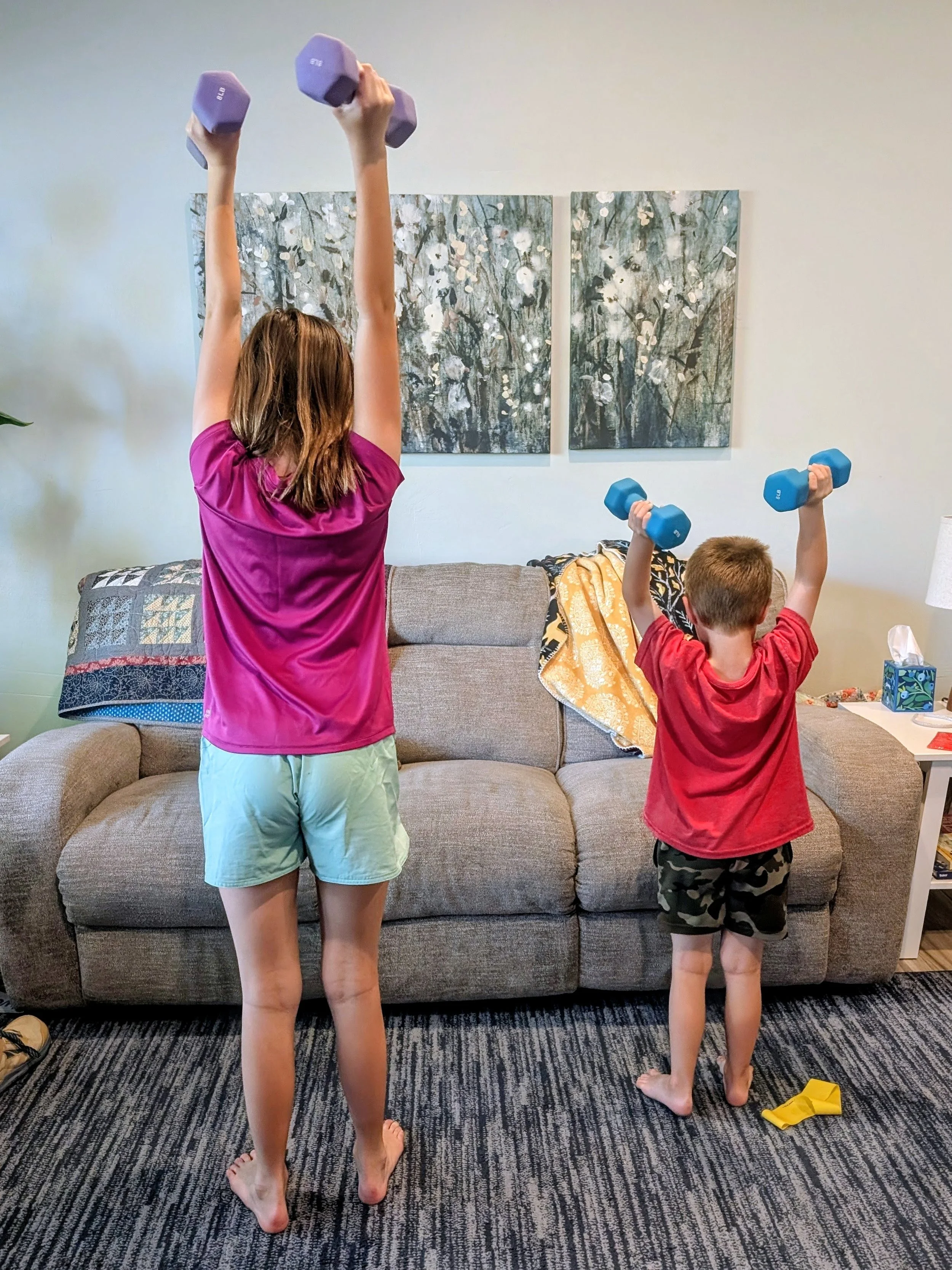
Every once in a while my kids will join me
strength training
resistance bands
carrying groceries
gardening
pushing or pulling
hiking hills
yoga holds
slow functional movement
Passive proprioceptive support can look like:
weighted blankets
foam rolling
massage
restorative yoga
compression leggings
deep pressure
long hugs
This might partly explain why so many people feel emotionally calmer after moving their bodies in strength training, stretching, or even simply doing chores around the house. The body receives feedback. Containment. Pressure. Orientation.
There’s something reassuring about physically feeling ourselves here. It doesn’t have to be hard core, prescriptive, or perfect. I simply ask myself every day, “Did I move today?”.
I love strength training, barre fitness, and yoga for helping me move in ways that leave me feeling grounded, capable, and good in my body.
Interestingly, not all nervous system support comes from movement. Some of it comes from comfort. From texture. From warmth. From ordinary sensory experiences we tend to dismiss as insignificant.
✋ Tactile Input: Small Sensory Comforts Matter
I am learning that nervous system regulation can be surprisingly ordinary.
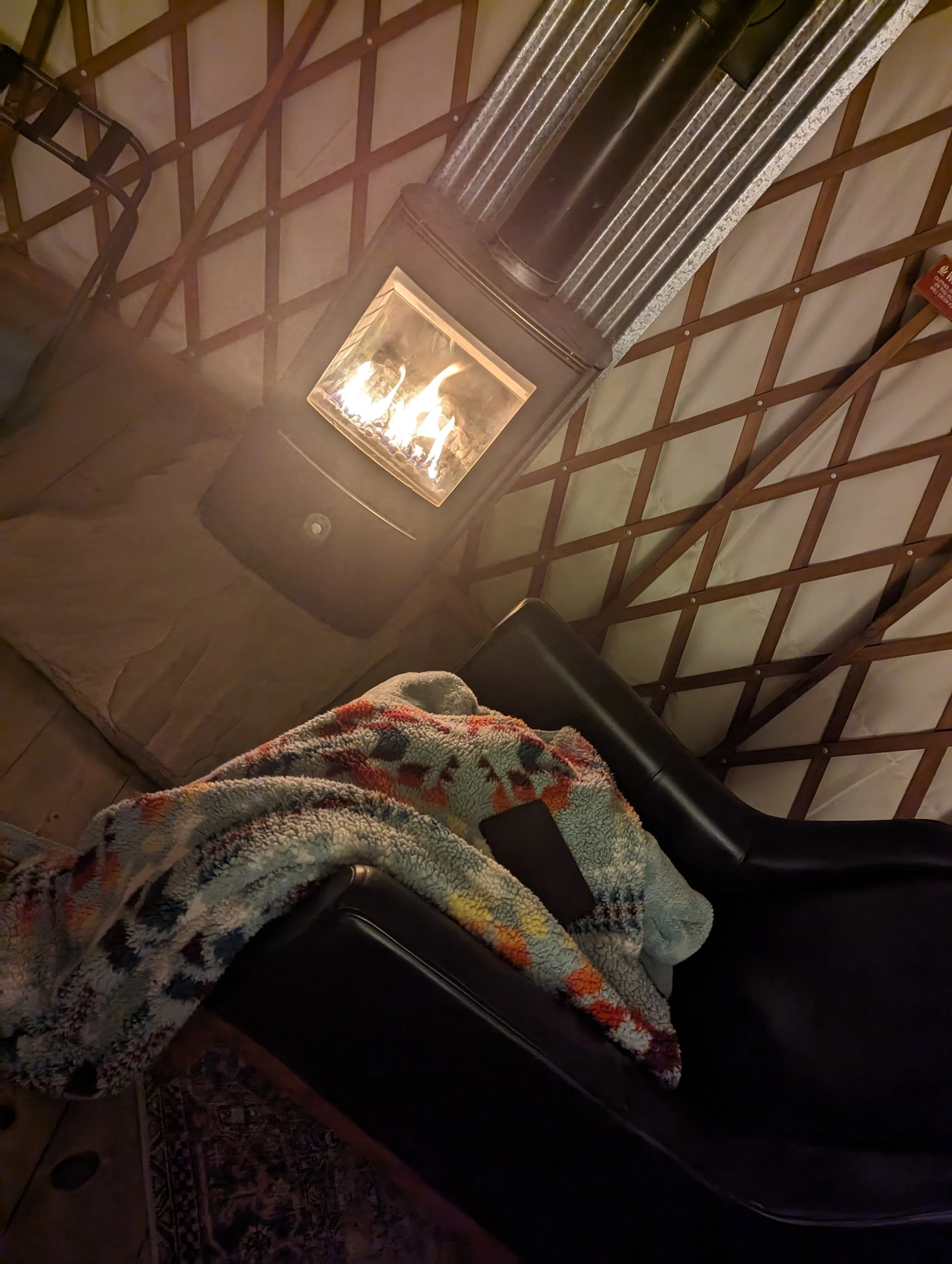
A soft blanket and book in front of a fire is the ultimate cozy
Warm baths. Cozy blankets. Bare feet in the grass. Sunlight on skin. Soft clothes. A pet curled up beside you. Washing your face. Body oil after a shower. The feeling of cool sheets at night.
These tiny sensory experiences communicate safety to the body in ways we often overlook.
Sometimes we think healing has to be dramatic when really the nervous system may simply need more consistent moments of comfort and softness woven throughout the day.
I love all of the small creature comforts! I often wear soft, cozy clothes, follow warm showers or baths with body oils, and end my day with a candle, tea, soft blankets, and a chill book.
☀️ Circadian Rhythms: The Nervous System Loves Predictability
Our nervous systems are deeply connected to rhythm and light.
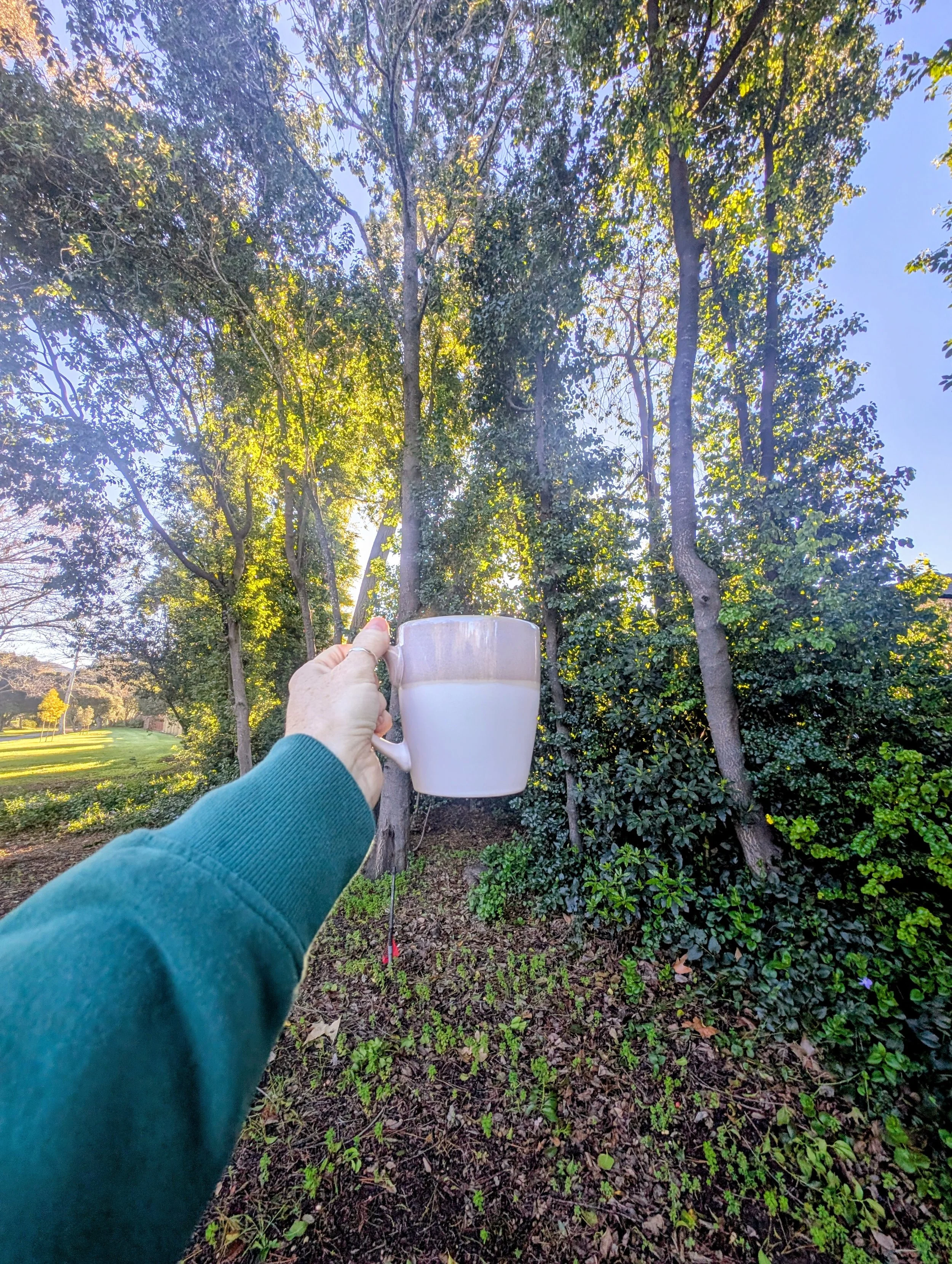
Morning tea moment outside
Morning sunlight, regular meal timing, movement during the day, dimmer lights at night, slower evenings, and consistent sleep routines all provide cues of safety and orientation to the body.
Modern life tends to blur these signals. We stay indoors under artificial light, scroll late into the night, rush through meals, and override fatigue with caffeine and stimulation.
I know I personally feel dramatically different when I start my day slow with a peaceful moment versus immediately on my phone tackling my to-do list.
The body likes rhythm. It likes knowing when to wake, eat, move, rest, and recover.
Not perfectly. Just consistently enough to feel supported.
Most mornings, I try to give myself a few quiet moments to stretch, breathe, meditate, and ground before my day gets busy. I complete my wake up ritual with a few moments of deep breathing outside watching the morning sun. Can you give yourself 5 minutes of calm before the to-do list? Perhaps enjoy those first few sips of warm morning beverage while looking towards the sunrise.
🍳 Blood Sugar + Gut Support: Nourishment is Nervous System Care

So lucky to have year round farmer’s market produce
Blood sugar instability can feel a lot like anxiety in the body.
Shakiness. Irritability. Racing thoughts. Fatigue. Cravings. Mood swings. Overwhelm.
And when the nervous system is already stressed, digestion often suffers too.
Nourishment is not separate from nervous system healing.
Eating enough protein, fiber, healthy fats, minerals, hydration, and supportive foods throughout the day creates steadier energy and more resilience inside the body.
Not from a place of perfection or food obsession. Just support.
The gut and nervous system are constantly communicating. Sometimes healing starts with simpler meals, less overstimulation, slower eating, and remembering that the body needs fuel to feel safe.
I’ve noticed stabilizing my blood sugar has made me feel significantly steadier emotionally, mentally, and physically — and honestly, my family has noticed too. I really appreciated the perspectives of Jessie Inchaupse, Jason Fung, and Mindy Pelz and wearing a continuous glucose monitor for a while to really help me deepen my understanding of what was going on in my body.
And eventually I started noticing that nervous system support wasn’t only about what I was doing. It was also about the environments I was living inside all day long.
🏡 Home as a Co-Regulator
I’m in a big era of focusing my energy on cultivating a nourishing home nest for me and my family.
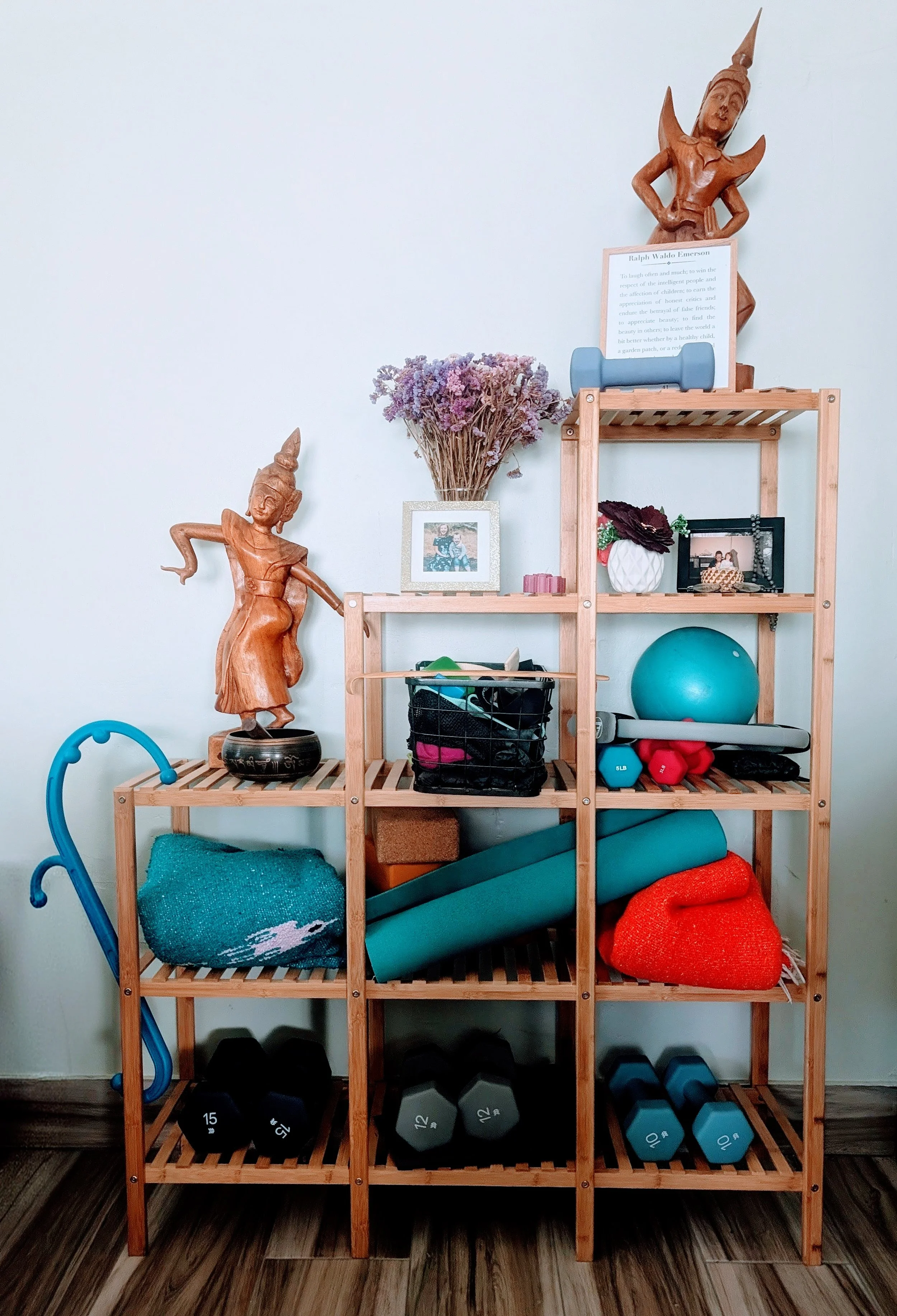
My home yoga studio workout zone has all the toys that support a little nervous system regulation
Not from a perfectionistic Pinterest perspective. But from a real life, lived in, sensory safe one.
Lighting. Clutter. Noise. Texture. Visual overwhelm. Spaces that invite exhale versus tension.
Home can become a co-regulator.
A lamp instead of overhead lighting. Music while cooking dinner. A cozy chair. Open windows. Candles. Less visual chaos. A corner to stretch or breathe. Even small environmental shifts can communicate safety to the body.
Especially for women and mothers carrying a lot of invisible mental load, I think this matters more than we realize.
For me, this looks like cozy chairs, comfy cushions, soft blankets, candles, books, pillows, and my yoga studio corner making my living room feel like peace.
🔁 Healing Through Repetition, Not Intensity
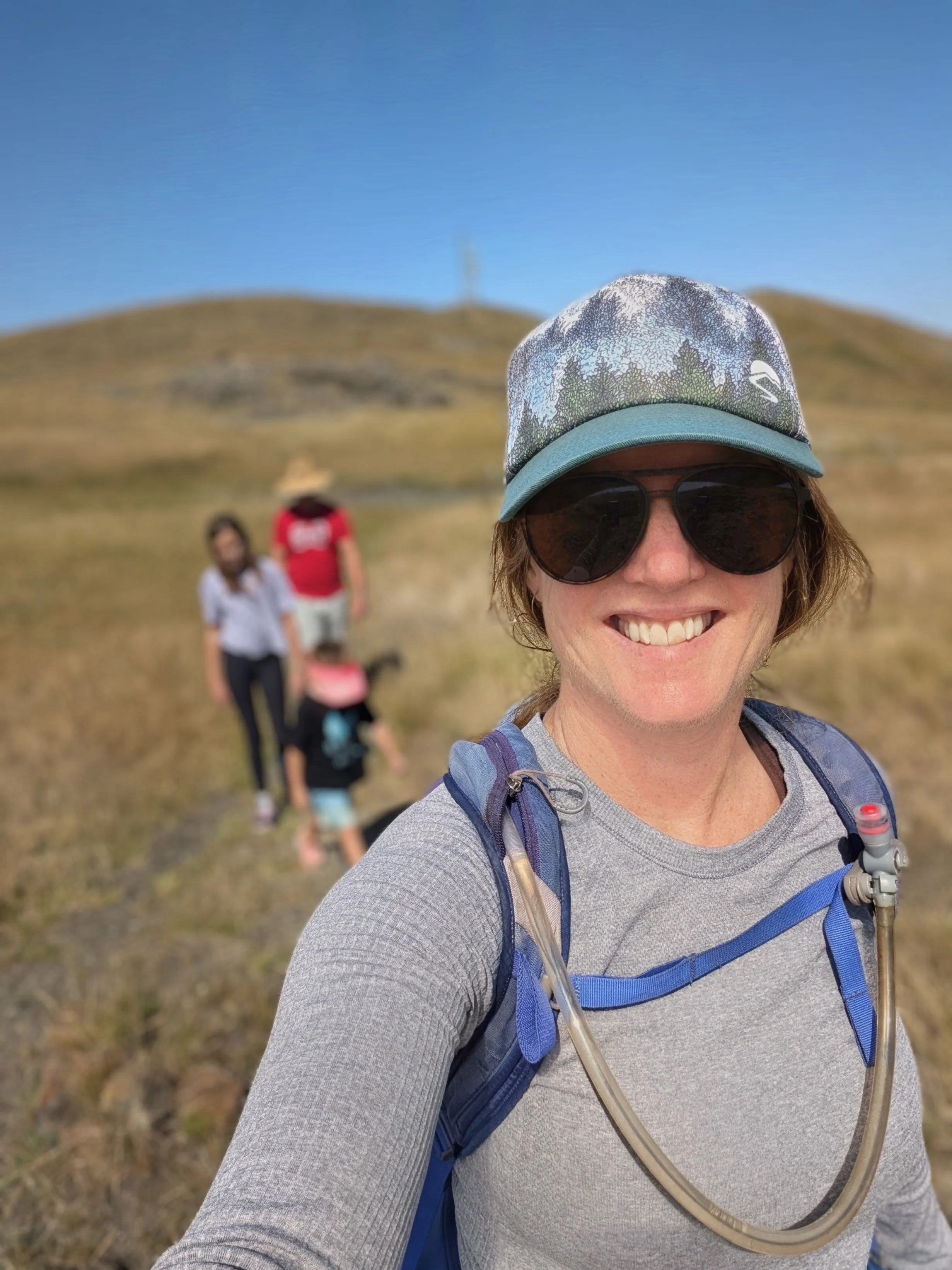
All the outdoor walking moments do add up
One thing I appreciate so much about Passaler’s work is that it gently reframes healing away from urgency and reminds me that it can really be a more simple, continual process.
The nervous system doesn’t usually heal through force. As much as I’ve tried.
It heals through repetition.
Through rhythm.
Through enough small moments of safety repeated over time.
And maybe that’s hopeful.
Maybe healing doesn’t require becoming a completely different person or spending all your extra time trying to “fix” yourself. Maybe it starts with building a life that feels just a little more supportive to live inside of each day.
A little more grounded.
A little less overstimulating.
A little softer around the edges.
Before deep healing work begins, the body often needs evidence that it is truly safe enough to downshift.
And perhaps these small daily rhythms are part of how we begin.
⬇️ What sensory rituals help your nervous system feel safest lately?
🌿 Part of the Heal Your Nervous System series
Lately, I’ve been slowly working through ideas inspired by Heal Your Nervous System and reflecting on what nervous system healing can look like in real, everyday life.
This series explores gentle structure, sensory support, movement, nourishment, and the small rhythms that help the body feel safe enough to heal.
Read next:
(⏪ Previous Post) Why Healing Your Nervous System Might Be The Missing Piece
(⏭️ Next Post) - Building Nervous System Awareness