
Why So Many Women Feel Rushed: The 3 Ancient Human Drives Still Running the Show
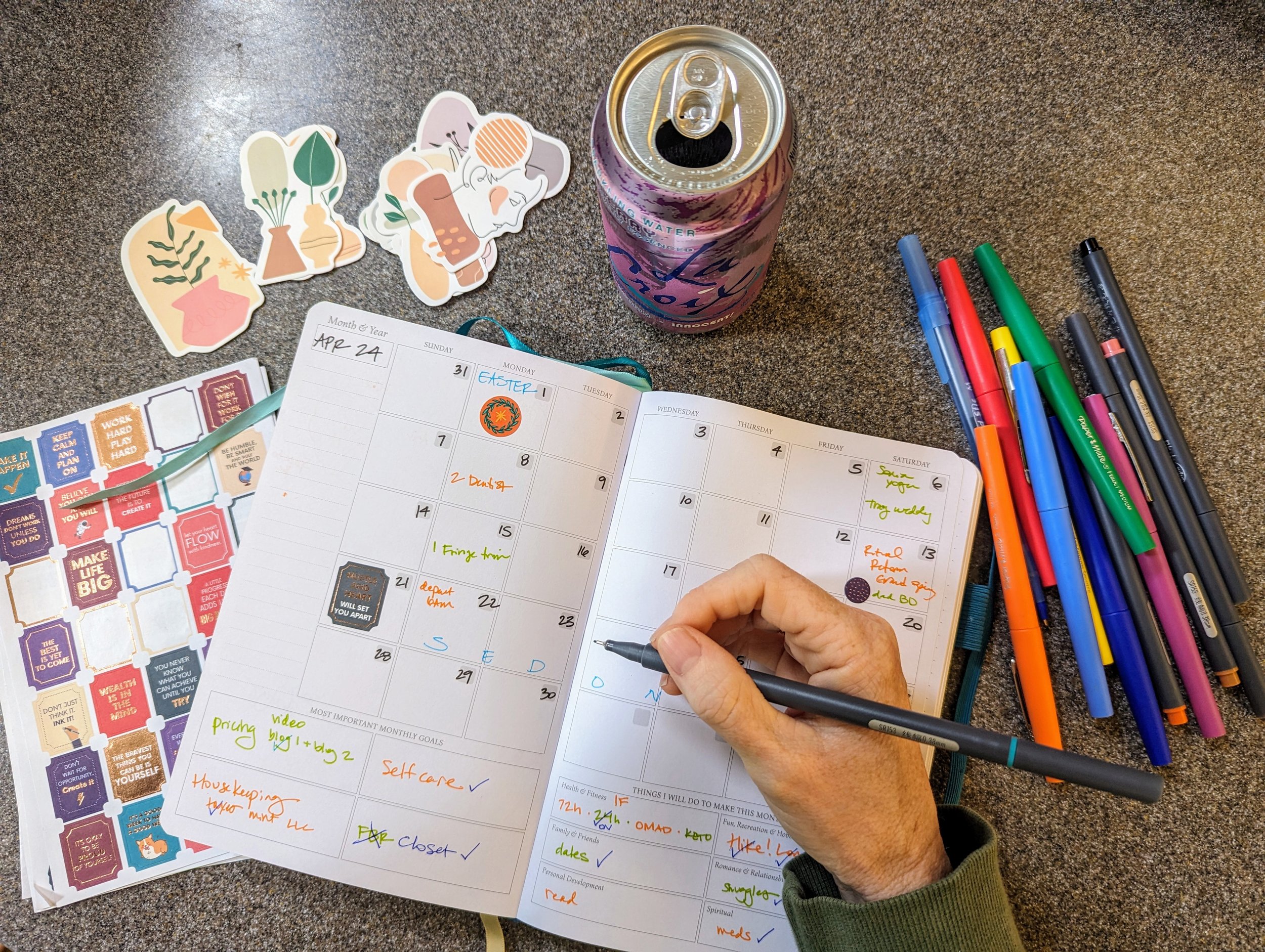
Full life, full mind, full plate
There’s a framework I keep coming back to lately—one that helps explain why so many women move through life feeling chronically rushed, overextended, and responsible for everything.
Not because we’re broken.
Not because we’re bad at boundaries.
Not because we’re doing life wrong.
But because many of us are running a very old biological pattern in a very modern world.
Dr. Libby Weaver talks about this in Rushing Woman’s Syndrome, and the idea is simple but clarifying:
Many of the behaviors women shame themselves for—over-functioning, overthinking, people pleasing, rushing, emotional labor, never quite resting—can be traced back to three deeply human survival drives:
to gather
to nurture
to protect
These are not flaws.
They’re old instincts.
And for many of us, they’re still quietly running in the background.
The Drive to Gather
Long before modern calendars and grocery delivery, gathering meant survival.
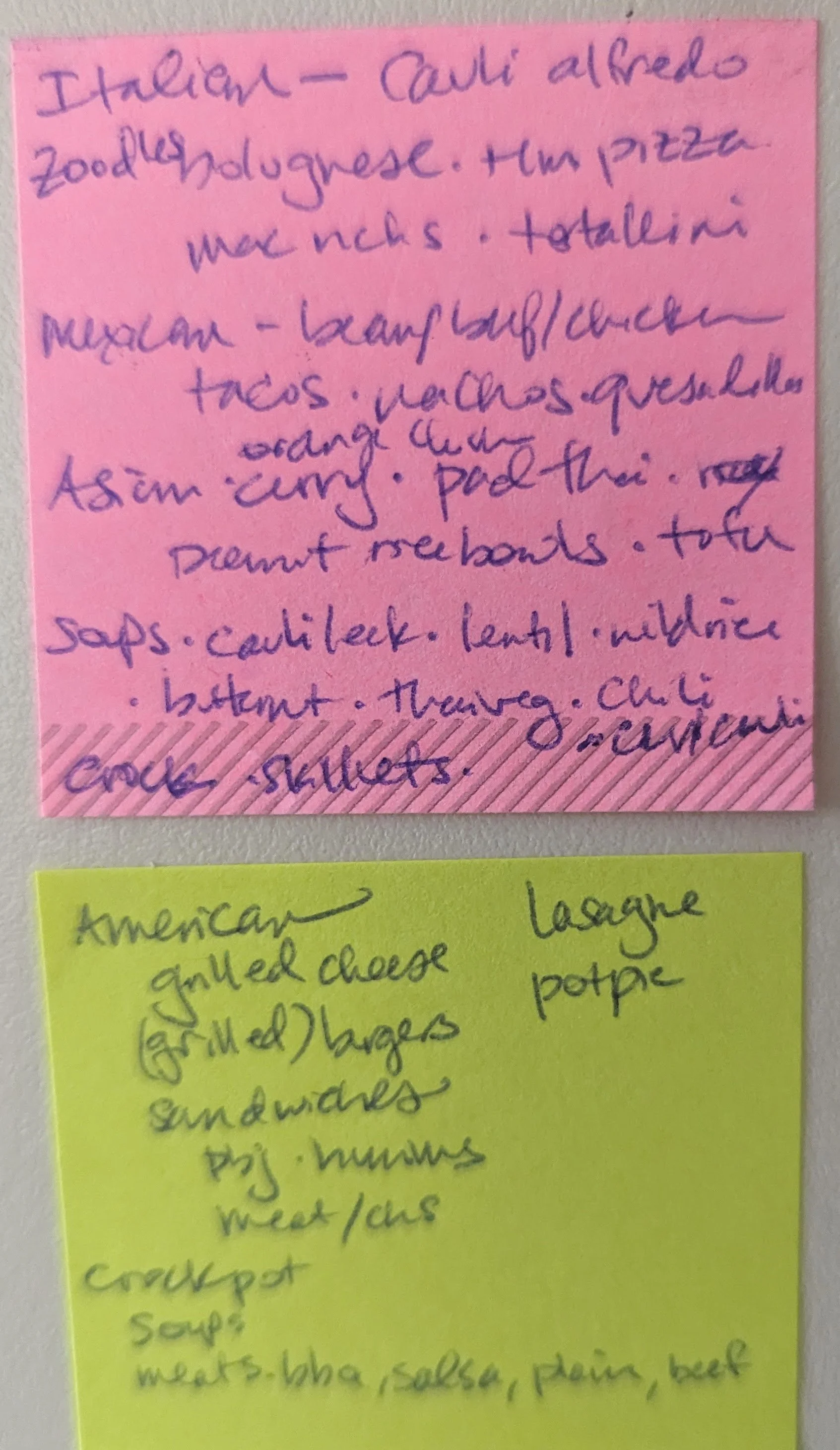
My love of organizing with post-it’s is so deep
To gather was to prepare.
To collect what was needed.
To make sure there was enough.
To think ahead.
To prevent scarcity before it arrived.
That instinct still lives in many of us now—it just wears different clothes.
Today, gathering can look like:
over-planning
over-preparing
keeping too much in your head
buying “just in case”
hoarding information
doing one more thing before resting
feeling safest when everything is handled
It’s the part of us that says:
If I can just get ahead, I can relax.
But of course, the finish line keeps moving.
Reflection prompt:
Where does “gathering” show up most in my life right now?
(Things? Tasks? Information? Emotional responsibility? Control?)
🎔
My little math brain and lifetime tenure as an overachieving eldest daughter make me a natural over-planner (if there is such a thing). My husband, on the other hand, is wired entirely differently, and cohabitating with this delightfully foreign creature has taught me a great deal about presence, flexibility, and the art of living a little more in the moment.
The Drive to Nurture
To nurture is to tend.
To soothe.
To notice needs.
To maintain connection.
To care for what matters.
This is one of our most beautiful instincts.
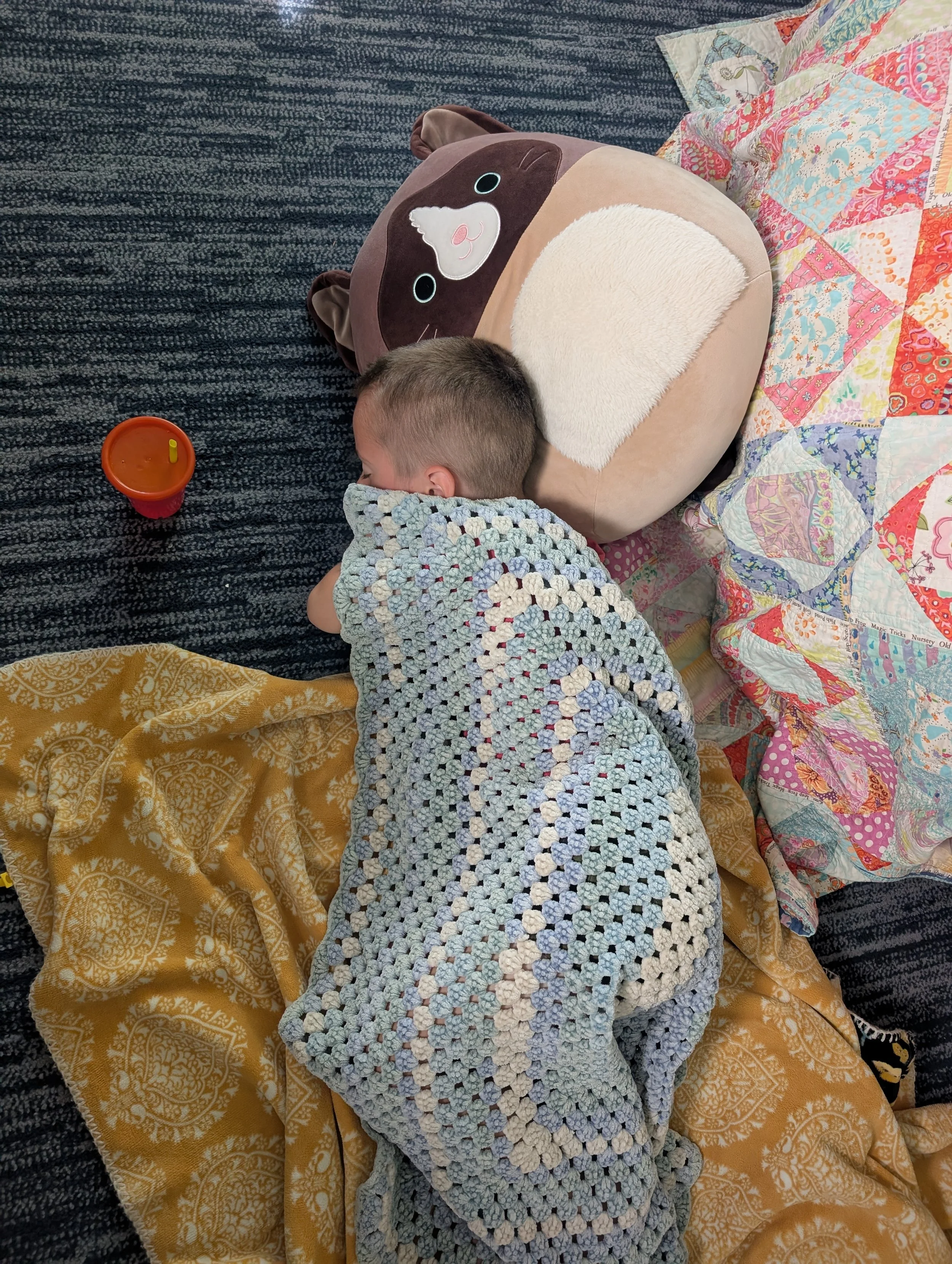
my sick boy recently
It helps us mother, partner, lead, teach, create community, and care deeply.
But in modern life, this instinct can quietly become over-functioning.
Nurturing becomes:
anticipating everyone’s needs
smoothing tension before it forms
over-explaining
emotional labor
managing the room
people pleasing
feeling responsible for how everyone else feels
This is often where women begin to confuse care with responsibility.
Care says: I can love you.
Over-functioning says: I am responsible for keeping everyone okay.
Those are not the same thing.
Reflection prompt:
Where do I confuse being loving with being responsible?
🎔
As the daughter of a mother shaped by narcissism and alcohol, I learned early how to read a room, anticipate needs, and manage the emotional weather around me. I became highly skilled at sensing what might prevent conflict—often at my own expense. It made me remarkably capable, and remarkably attuned to all the work that could be done.
But when I was running my own yoga studio and becoming a mother at the same time, something in that pattern began to break. I found myself sobbing at a meditation retreat when my daughter was just a year old, overwhelmed by the thought of going home. That moment broke my heart on more than one level.
It was also a turning point.
I made a commitment that day to begin doing deeper internal work—to learn how to care for myself and my family without constantly abandoning myself in the process. To stop confusing exhaustion with devotion. To build a life that could hold both care and capacity.
The Drive to Protect
This is the one I think many of us miss.

How can we not get crazy about protecting our loved ones?
Protection doesn’t always look like fighting.
More often, it looks like vigilance.
To protect is to scan.
To anticipate.
To prevent.
To brace.
To stay one step ahead of what could go wrong.
This drive often hides underneath the rushing.
It sounds like:
If I stay ahead, things won’t fall apart
If I handle it now, no one gets upset
If I keep moving, I stay safe
If I prepare enough, I can prevent discomfort
Protection in modern life can look like:
urgency
tension
hypervigilance
controlling
rushing
over-managing
difficulty resting
always scanning for what’s next
This is often the real engine beneath the “rushing woman” loop.
Not laziness.
Not poor time management.
Not failure.
Protection.
Reflection prompt:
What am I trying to prevent when I rush?
🎔
For me, this shows up most often as: If I keep moving, I stay safe. It has taken years of reflection to recognize the quiet undercurrent beneath so much of my urgency—a fear that I am somehow not enough unless I am working, producing, or proving my worth in the world.
When These 3 Drives Run Unchecked
When gathering, nurturing, and protecting all fire at once, many women end up living in a loop that looks something like this:
accumulate
anticipate
appease
prevent
perform
repeat
And from the outside, it can look like competence.
But from the inside, it often feels like chronic tension.
This is one reason so many women look “high functioning” while quietly feeling exhausted.
The Goal Isn’t to Shut These Instincts Down

Can we pause and reflect with softness?
These drives are not the enemy.
They are part of what makes many women deeply capable, intuitive, prepared, loving, and resilient.
The work is not to erase them. The work is to notice when they’ve moved from wise instinct into chronic overdrive.
To ask:
Is this care, or control?
Is this preparation, or fear?
Is this protection, or hypervigilance?
Is this generosity, or self-erasure?
Awareness creates choice.
And choice is where the rushing begins to soften.
A Slower Way Forward

Not aiming for perfection—just space, softness, possibility.
Maybe the goal is not to become less caring.
Less prepared.
Less aware.
Maybe the goal is to become more discerning.
To gather without gripping.
To nurture without over-functioning.
To protect within reason.
To let support in. To let space in.
To release what was never yours to carry.
To stop confusing urgency with safety.
Closing reflection prompt:
Which of these three drives runs strongest in me right now—gather, nurture, or protect?
What would it look like to soften it by 10% this week?
🎔
I’m learning that much of the stress I carry—the dysregulation, the chronic low-grade tension, even some of the mild but persistent health challenges I navigate—are shaped by these instinctual drives colliding with my own history, conditioning, and survival patterns. It’s a potent recipe for one very overwhelmed midlife mother.
My life is not inherently stressful. More often, it’s my relationship to stress—the way I respond, brace, attach, anticipate, and fall back into old habits built in my survival years.
But I am committed to finding another way.
Unlike my mother, who carried so much with so little support, I have been given the gift of space to reflect, re-pattern, and choose differently as my children move into their middle years. I don’t take that lightly.
I hope to model a wiser version of womanhood for my daughter as she becomes a young woman before my eyes. And I hope to raise a son who knows how to recognize, respect, and support the fullness of the women in his life.
🎔
I highly recommend the book Rushing Woman’s Syndrome by Libby Weaver for a grounded, accessible look at the biological and emotional patterns beneath modern overwhelm—and a thoughtful reframe for how many of us move through the busy-ness of daily life.