
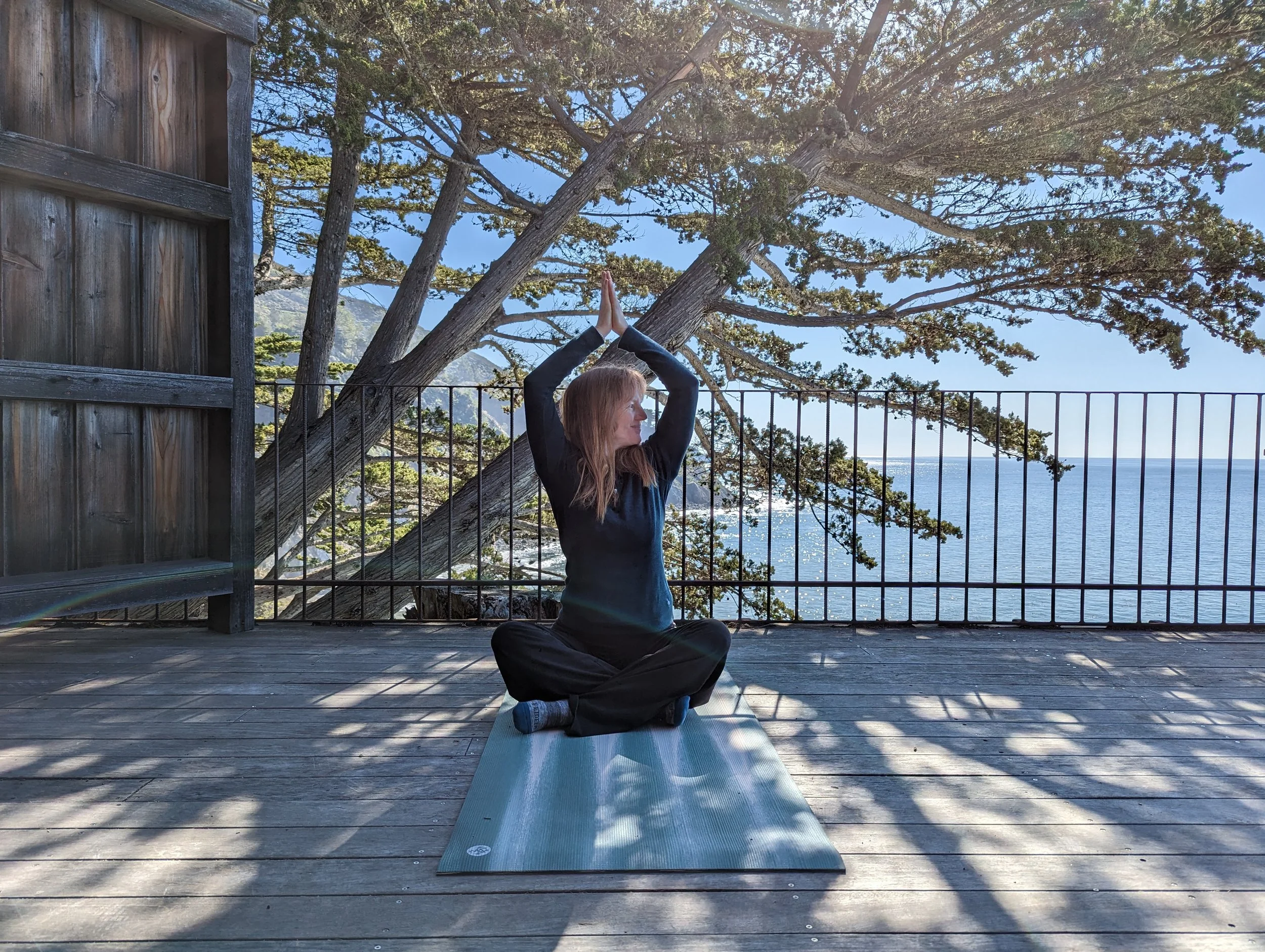
One winter evening, I found myself feeling annoyed and frustrated after what seemed like an ordinary weekday with my family. I wanted to tell everyone in my house to leave me alone. Why am I feeling so grumpy over nothing? I checked all the boxes that day: I woke up to meditation and yoga, ate well, moved my body, worked and fed everyone.
I found myself wondering, why does my life so often feel like too much? When I looked at what I was spending my time on it seemed totally reasonable as a whole. The tension in my shoulders and neck rarely let up. My sleep was erratic and easily disrupted. My mood was easily thrown off by family chaos.
Recognizing a pattern of stress or overwhelm is useful. Knowing what to do with that awareness is another layer of learning.
In Heal Your Nervous System, by Linnea Passaler, she describes how spending prolonged periods on high alert can leave us depleted, with fewer opportunities for rest and recovery. She connects this pattern with the body’s energy demands, including the work of mitochondria, the structures that help our cells produce usable energy. Her explanation helped me think differently about my own exhaustion and the importance of giving my body regular opportunities to settle.
In this next part of my nervous system series, I’m exploring four entry points described in Passaler’s book: breath, muscles, touch, and interoception—our sense of what’s happening inside the body.
Passaler emphasizes cultivating an embodied sense of safety: opportunities to experience feeling supported and at ease in the body. Through breath, muscles, touch, and awareness of internal sensations, we can explore what helps us soften our guard. With practice, these experiences may make it easier to settle after stress and respond more flexibly to everyday demands.
From awareness to agency
Awareness gives us information. Agency is the growing sense that we have some choice in how we respond.
That choice might be small. We can unclench our hands. Take a deep breath. Change position. Step outside. Notice that we need food or quiet instead of another push through the afternoon.
Regulation doesn't mean staying calm all the time. We need energy to show up for life, teach a class, lift something heavy, protect a boundary, or respond to a challenge. We also need ways to settle afterward. Sometimes we need support finding a little energy and connection when we feel flat or withdrawn.
The practice is learning to recognize what might help and having a few options available. Over time, those experiences can build trust: I can notice what's happening. I can try something. I can change course.
Recently, I didn’t feel good after getting vaccinated. My old instinct was to push through and do the work I had planned on doing. The infinite to-do list was haunting me. Instead, I noticed how tired I was and chose more rest. It’s humbling to need more rest than I once needed, but it feels like a truer response to what I needed. My family can handle a mom night off. My responsibilities aren’t going anywhere.
Four portals into regulation
The following portals, or entry points, are ways for us to turn the tides and teach our bodies how to come back to more rest and digest states of being. I find the idea of a portal helpful because it gives us a straightforward place to begin. We don't have to address everything at once, and we don't have to start with the same practice every time.
Here are four portals or entry points to explore. These examples are invitations to experiment, rather than a prescribed sequence.
Breath: something to notice before something to change
One of the quickest ways to influence your nervous system state is through the breath portal. This is not only an age-old concept, but also an extensively researched one.
Our breath is often one of the first places we notice effort. We may hold it while concentrating, breathe quickly when we're anxious, or realize we've been bracing through an ordinary task.
A starting point is simply to notice: Am I holding my breath? Does breathing feel easy or effortful? Would a softer, unhurried exhale feel welcome?
If it feels comfortable, try one of the following breathing exercises:
Take a few easy, steady breaths, allowing the exhale to lengthen slightly. There's no need to take the biggest breath possible or turn it into another task to get right.
The physiological sigh is a type of controlled breathing that involves inhaling through the nose, followed by a smaller second inhale, then a slow audible exhale through the mouth.
Box breathing involves inhaling slowly through your nose counting to 4. Hold your breath in your lungs without straining, counting to 4. Release the breath slowly and steadily through your mouth (or nose), counting to 4. Hold your breath on after the exhale, counting to 4.
Breath practices don't feel helpful to everyone in every moment. If focusing on breathing makes you more uncomfortable, you can choose another portal.
I try to find a few moments each day where I focus on steadying my breath, softening my mind, and relaxing my body. If I have more than a few moments, I practice box breathing, especially through long yoga posture holds. I find myself practicing the physiological sigh most when I need a reset in the flow of life.
Muscles: noticing effort and exploring release
Muscles give us another way to notice what we're carrying. The raised shoulders. The tight jaw. The hands gripping the steering wheel. Tension in the hips and low back.
Sometimes we can soften a little once we notice. Other times, a small amount of intentional movement or effort feels more accessible than being told to relax. Pressing our feet into the floor, gently pushing our palms together, or moving our shoulders can give us something concrete to feel. Then we can pause and notice what happens when the effort ends.
The point is to explore the difference between working and resting, holding and letting go. A body accustomed to bracing may need practice recognizing those differences.
I habitually hold tension everywhere, which is probably why I loved yoga so much when I found it many moons ago! My tension seems to change based on the season. Recently I’ve been feeling more tension in my neck and shoulders and have found intentional stretching, massage with a tennis ball, hydration, and rest to be most helpful.
Movement: a great starting point
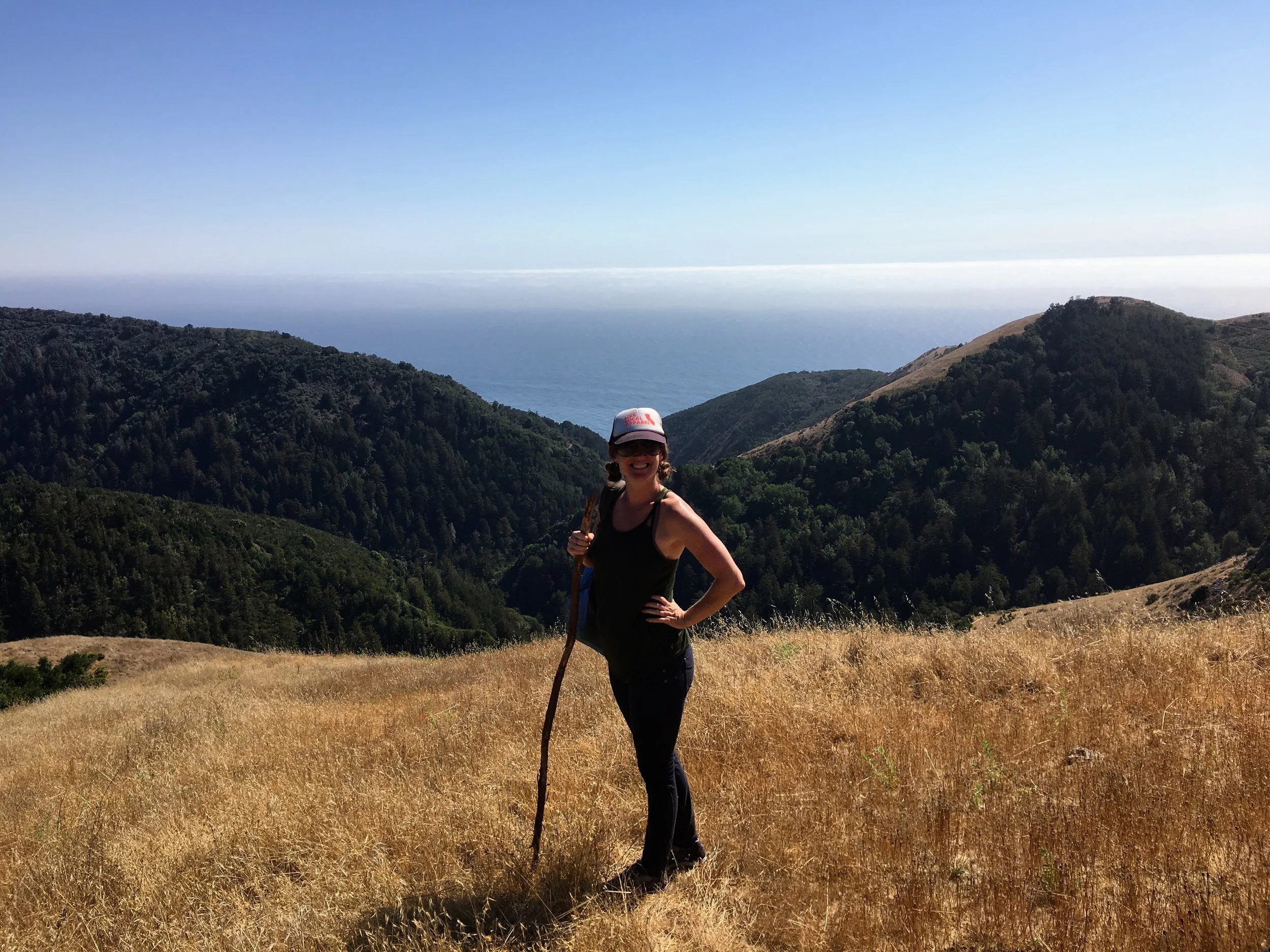
Walking is a great way to connect to movement
Movement is one way I work with the muscle portal, and it has been part of my life since long before I had language for nervous system regulation. It gave me a way to regulate my nervous system during years when life felt hard and I didn’t have much control over my life.
Movement deserves particular attention because stillness isn't always the easiest place to begin. Walking, swaying, moving through familiar yoga shapes, or pressing against resistance gives us something tangible to do and feel. We can adjust the pace, range, and effort, then notice how we respond. That makes movement a useful place to practice agency: I can start small. I can use more effort. I can stop. A challenging workout, a gentle stretch, and a quiet walk serve different purposes and support the nervous system. The familiar practice isn't always the one we need today. Part of the learning is noticing how we feel during movement and afterward, then allowing that information to influence the next choice.
I’ve noticed lately that my body appreciates long walks outside and days of rest despite my type A urge to push harder and get stronger. I sleep better and my mood improves. So, I’ve built in at least one day a week to just chill and often more based on how life unfolds.
Touch: contact that feels welcome
Touch can be another point of contact with the present moment. A hand resting on an arm. The feeling of a blanket around our shoulders. A hug from someone we trust.
The important part is how the contact feels to the person receiving it. A hand on the chest may feel reassuring to one person and uncomfortable to another. We get to choose the location, pressure, and duration—or decide that touch isn't what we want right now.
Try something simple and notice your response: Hug a loved one, hold hands, snuggle. Does this feel pleasant, neutral, or unwelcome? Would I like more pressure, less pressure, or no contact at all? Having that choice is part of the practice.
I love good hugs, and a session with a skilled, trusted massage therapist is one of my favorite ways to ease accumulated tension
Interoception: listening to what's happening inside
Interoception is our sense of the body's internal signals: hunger, fullness, warmth, heartbeat, breathing, and the need to use the bathroom, among others.
For this practice, it might begin with a brief question: What can I feel inside right now?
We don't need to scan every sensation or interpret everything we find. We might simply notice thirst, an empty stomach, or warmth after moving. Then, when possible, we can respond.
Paying attention inside can sometimes feel overwhelming, especially when we're already anxious about bodily sensations. At other times, internal signals may feel faint or difficult to identify. We can keep our check-ins brief, shift attention to the room around us, or return to a different portal. Listening includes noticing when we've had enough.
After a lifetime of ignoring my body’s subtle messages, it’s taken me time to hear what my body is saying. I’ve gotten better at noticing my shortened breath under duress. I sometimes misinterpret anxiety as hunger.
Reclaiming bodyfulness
I like the word bodyfulness because it brings the body back into the conversation about mindfulness. Mindfulness can include the whole body, but it's easy to approach it as another mental exercise: observe the thoughts, concentrate harder, try to quiet the mind. Bodyfulness reminds me to feel my feet while I'm standing, notice the temperature of the air, or recognize that I'm gripping through a stretch. It invites a more direct relationship with experience before I start explaining it. For those of us who spend a lot of time planning, caring for others, and keeping things moving, a moment of feeling can be a meaningful change of pace.
Building a practice that fits a real day
I don't want regulation to become another elaborate routine I feel behind on.
There is room for longer practices, but there is also value in an ordinary pause: feeling my feet before answering a difficult message, moving between tasks, or noticing that I need a few quiet minutes after being available to everyone else.
Choose one portal and try something small alongside something you already do each day. Then check in: Do I feel a little more settled, present, or able to choose my next step? Would something else be more helpful?
Sometimes the answer will be that a practice hasn't changed much. Sometimes the need is practical: less on the calendar, a meal, help with the kids, or a conversation we've been avoiding. Paying attention to the body can help us recognize those needs, too.
For me, some of these practices are pretty routine and I do them in little doses in home life, bigger doses on the yoga mat, and on the hiking trails. I sometimes get caught up in the goals of exercise and forget how much movement supports my daily life. My kids know how to take a deep breath, move their bodies, and check in with their bodies. We’re learning together.
Finding your own way back

Clear day view from Montana de Oro State Park
These days, I’m getting better at noticing when my nervous system feels elevated and building in preventative routines to help me stay regulated. Committing to one yoga practice a week in community has been a welcome shift. I laugh at the relentlessness of parenthood. I pause at the constant phone notifications. If I need an evening off, I take it.
I still have evenings when everything feels like too much. I’m getting better at recognizing that feeling and considering what I need before I push through.
Which portal feels most accessible to you right now: breath, muscles, touch, or noticing what's happening inside?
🌿 Part of the Heal Your Nervous System series
Lately, I’ve been slowly working through ideas inspired by Heal Your Nervous System and reflecting on what nervous system healing can look like in real, everyday life.
This series explores gentle structure, sensory support, movement, nourishment, and the small rhythms that help the body feel safe enough to heal.
Read next:
(⏪ Previous Post) - Building Nervous System Awareness
(⏭️ Next Post: Coming Soon!) - Rebuilding Nervous System Flexibility