
A few reminders for a full, connected, heart-led life through the demanding midlife years of caring for aging parents, raising children, and living in changing bodies.
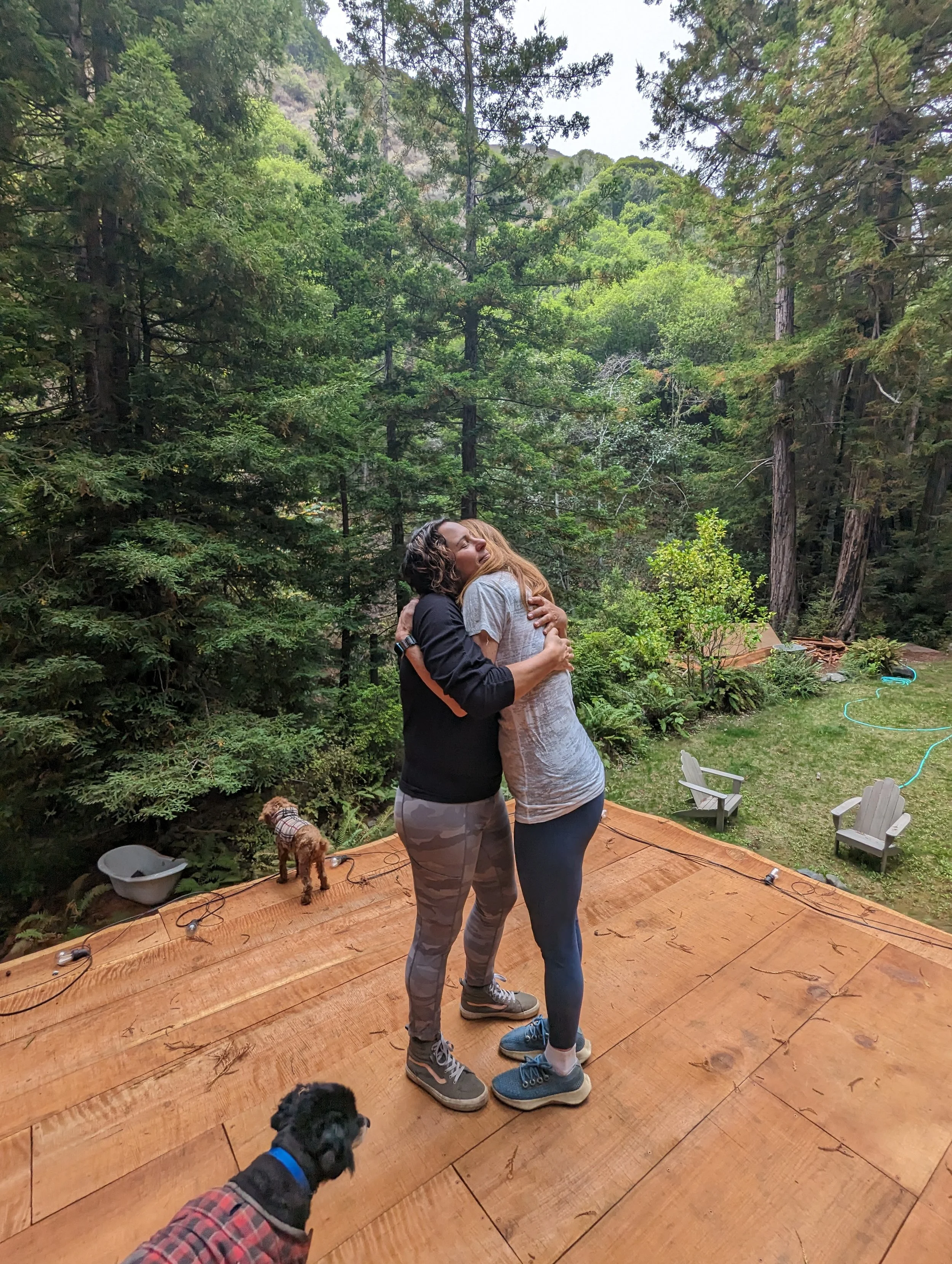
Lately, I've been making room in my life by dealing with things I've been putting off. Closing down the remaining pieces of my consulting business. Sorting through books and shelves. Saving writing I still care about and deciding what I can release. It feels good.
At the same time, my dad's house is getting closer to being sold. There's something about the work of clearing a life out of a house that brings up questions a to-do list can't answer.
What do we want to keep? What mattered? And what are we doing with the time we still have?
In conversations with friends, I keep hearing how much these middle years ask of us. Children, aging parents, work, changing bodies, and all the remembering and organizing that keeps life moving.
I'm doing my best to tend to my well-being without losing my sanity in the process. I notice longer gaps between meaningful time with friends and loved ones. Some things that used to fill my cup now deplete me. I find myself grieving certain shifts and celebrating others, wondering what to hold onto and what to let go of.
Looking toward the end of life gives me another way to consider what deserves my attention now.
These questions have led me back to Buddhist teachings on impermanence, reflections from people who care for the dying, and research on what supports a good life. They offer different kinds of wisdom: personal observations, spiritual practices, and research findings. I don't read any of them as a promise of a long or regret-free life. But I find useful connections between them: relationships, meaningful participation, everyday pleasure, and care for the body carrying us through it all.
Let meaningful work have a place—and give connection time, too
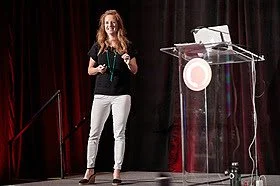
Public speaking was my favorite!
I have mixed feelings about the familiar advice to work less. Work can be creative, useful, satisfying, and deeply connected to who we are. It can also be how we keep a roof over our family's heads and food on the table.
There is also so much unpaid, often invisible work in midlife: remembering appointments, managing households, tending relationships, helping parents, volunteering. “Work less” lands differently when the work includes people who need us.
For years, I loved my work as a speaker, writer, and consultant to yoga and fitness studios through Fit Biz Rox and my career with Mindbody. I adored the clients, the teaching, the connecting, the traveling. It filled my intellectual and social cups and lit me up.
When I had my daughter, I remember panicking and saying, “I must keep traveling and working!” My husband supported me. There were wonderful work events bookended by stressful airport pumping sessions, and difficult homecomings when my little girl was upset that I'd been away.
My son arrived during COVID, around the same time my work was shifting. It was a strange and difficult change in identity, and I grieved the loss of work I adored. Yet, I also grew my presence muscles. I learned how to be a more grounded, receptive mom and experienced the gift of simply being together more continuously.
I'm grateful for both the rewarding work years and the quieter years of connection. I want to carry what I learned from each into this next chapter.
In her account of caring for people near the end of life, Bronnie Ware describes regret about excessive work, especially the family time it displaced. She also reflects on neglected friendships and lives shaped by other people's expectations. [1]
For me, this raises a question about proportion. How can I keep contributing through work while noticing when it begins taking more than I want to give?
Returning to my old consulting articles has reminded me that I still value what I created and experienced. As I consider what deserves a future place in my life, I'm asking how much room each commitment leaves for the people and experiences I love.
There will be demanding seasons. But if everyone I love is always waiting until I'm less busy or less stressed, perhaps I need to examine what keeps filling the space.
Give friendship a regular place in your life
It is easy to care about someone and still go months without seeing them.
Midlife has plenty of explanations: children, work, aging parents, appointments, fatigue. None of those are imaginary. Yet friendship can keep slipping toward the edge of a calendar already full of legitimate needs.
As my children grow, the ways they need me will change. I want to keep tending the other relationships that matter to me, even when finding time feels difficult.
In his TEDx talk, psychiatrist and Zen priest Robert Waldinger shares findings from the Harvard Study of Adult Development linking relationship quality with health and happiness over time. The emphasis is on relationships we can rely on, rather than a crowded social calendar. [2] Social connection is also recognized as an important public-health concern, with isolation and loneliness associated with poorer health and a higher risk of early death. [7]
The Blue Zones framework emphasizes belonging, supportive social circles, and time invested in loved ones. I take that as a reminder to give connection a regular place in everyday life. [3]
A regular walk. A walking phone call. A monthly gathering. Tea at a kitchen table. A voice message that doesn't require coordinating six schedules.
These small arrangements give friendship somewhere to live.
A good friend who lives across the country has shown me how much fun and closeness we can find over the phone. My parents weren't really phone people, and when I moved far away, our relationships changed. For a long time, I assumed I wasn't a phone person either. I've since learned that I can enjoy it, especially when it means staying close to someone I love.
The same device that distracts me with scrolling and clickbait can help me have a real conversation with a faraway friend. I'm trying to use it more often for that.
Connection also needs discernment. Making room for people who help us feel known can involve setting limits elsewhere. Family closeness looks different in different families.
Stay in touch with what brings you joy
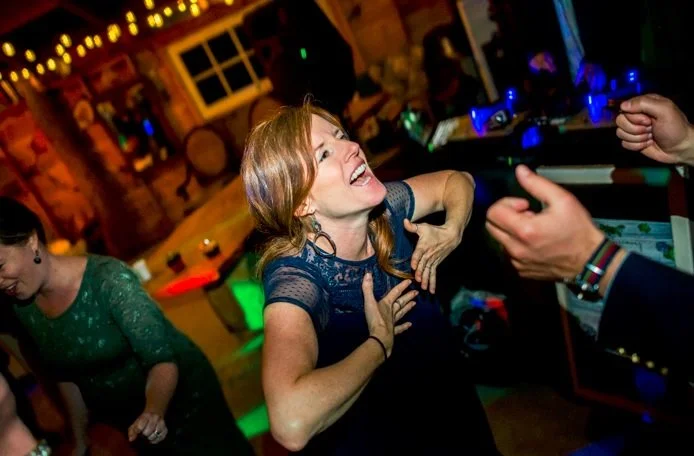
A good moment at a friends wedding
I used to feel self-conscious about my singing voice. My dad teased me about it, and I assumed I must have a terrible voice. But after many long nights singing my heart out with work besties, I've come to appreciate how much joy there is in singing.
Now I have fun singing along to my favorite songs, especially the ones that tell a story or capture a feeling that hits home. I don't need to decide whether I'm good enough before joining in.
Singing, dancing, hiking, and movement are all ways I come back to joy. I'm getting better at finding small moments for them, even on an ordinary busy day.
I can still get so practical that pleasure becomes something to fit in after the important things. But there's always another important thing to do.
Music in the car. Warm water. A favorite meal. An afternoon outside. Laughing with someone who understands your particular brand of ridiculous.
These remind me that there is more to a day than what I managed to finish.
Joy can be quiet, and it can coexist with grief. We don't need to feel grateful every moment or pretend that happiness is always a choice. Some seasons are genuinely hard. Even then, there may be a small pleasure we can notice or make room for without asking it to fix everything.
Care for the body that lets you participate
When I think about caring for my body, I want to remember what that care helps me experience.
Walking with a friend. Exploring a trail. Enjoying a movement class. Being comfortable enough to sit and listen. Having some energy left for the people at home.
The Blue Zones framework includes movement woven into daily life, a sense of purpose, and routines that help people downshift. Those ideas sit comfortably beside the strength training and intentional recovery I value. [3]
My body needs care now, in the middle of a busy life. Nourishment, movement, rest, and appropriate support all belong in that picture. My focus has shifted away from busy body energy, youthful looks and thinness toward supporting strength, comfort, and participation as I age. I also want my kids, especially my daughter, to see that kind of relationship with the body.
Pain, illness, disability, or aging may change how we participate. They don't erase the value of connection, creativity, pleasure, or contribution. Participation may look different from day to day or season to season. It’s still worth participating though.
I want my approach to wellness to help me inhabit the life I have now. That means paying attention to what nourishes me, what depletes me, and how those needs change. With movement, I'm learning to distinguish a challenge I can recover from and grow with from a demand that leaves me worn down. I'm also noticing when the pursuit of health consumes the time and energy it was supposed to support.
I especially want to be emotionally present for my kids as they enter adulthood—something my parents didn't really have the capacity to offer me. Caring for myself is part of how I hope to keep showing up for them.
Practice being here while life is still unfinished
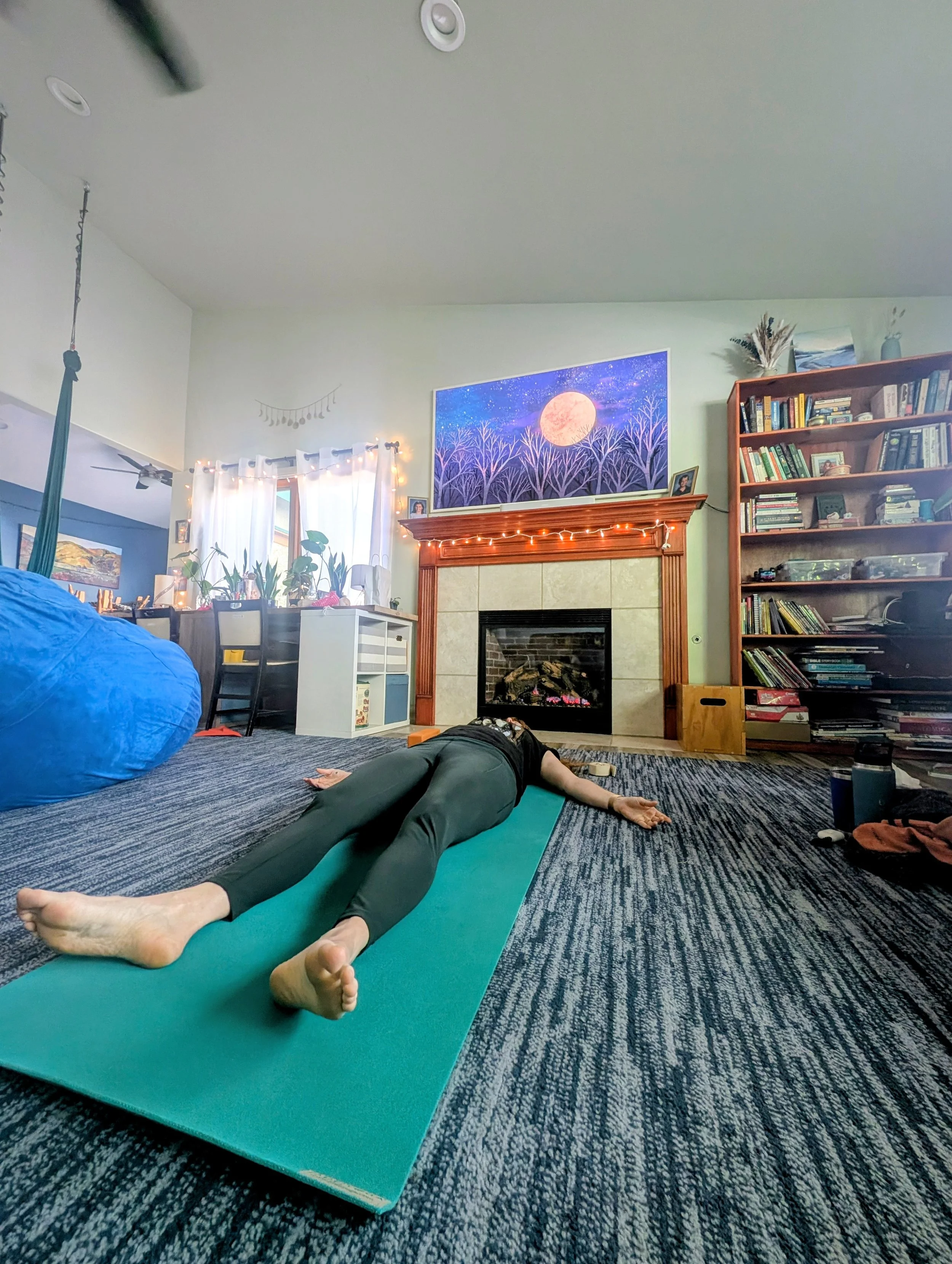
My householder mom life offers continual opportunities for spiritual practice: tiny moments to begin again and breathe.
My son slept in my room recently and woke while I was in the middle of my morning yoga and meditation. I responded to him, then returned to my practice. I was interrupted, but how often do we have a perfectly quiet space to connect with ourselves?
I've had many meaningful experiences of connecting with spirit in community. I'm learning how to stay connected in the ordinary early-morning hours, too, with a child beside me and the day already beginning.
The Buddhist Five Remembrances name aging, illness, death, the changing nature of our relationships, and the consequences of our actions. In the Plum Village tradition, contemplating these realities is a way to cherish life and relationships more consciously. [5]
I understand this as a practice of paying attention. The people I love are changing. So am I. There is no completely settled version of life in which everything will finally be ready for me to enjoy it.
Buddhist teacher and hospice cofounder Frank Ostaseski explores this territory in The Five Invitations, including the invitation not to wait. His work asks how an awareness of death can inform the way we live now. [6]
For me, that might mean looking up when someone starts talking. Saying the affectionate thing when I think it. Letting a good afternoon be good without immediately planning how to improve it.
Being present doesn't mean never getting distracted. I can notice that I've wandered into planning, worrying, or scrolling and return to the person—or the ordinary moment—in front of me.
What deserves more room?
I don't expect to arrange my life so perfectly that I never feel regret. I expect to keep noticing, making adjustments, and sometimes learning the same lesson again.
One lesson I keep returning to is how carefully I need to consider what I say yes to. A worthwhile commitment can still ask for more time, money, or emotional energy than I have to give.
Closing a business chapter, clearing a shelf, or releasing an old obligation gives me a chance to ask what I want the space for.
More time with loved ones. More movement outside. A little creativity. An ordinary pleasure I keep postponing.
I'm learning that declining a request can be part of caring for myself and the people closest to me. It leaves room for the things I want to keep tending while I can.
What is one thing you would like to give more of your time or attention to—and what could you loosen your grip on to make room?
Resources & Further Exploration
Bronnie Ware, Regrets of the Dying. Personal observations from her palliative-care work, later developed into a memoir.
Robert Waldinger, What Makes a Good Life? Lessons from the Longest Study on Happiness, TEDxBeaconStreet. See also the Harvard Study of Adult Development.
Dan Buettner, Blue Zones Power 9. This post draws on its themes of movement, purpose, downshifting, and connection.
Robert Waldinger and Marc Schulz, The Good Life. Further reading on relationships and well-being, drawing on the Harvard Study of Adult Development.
Plum Village, Daily Contemplations on Impermanence & Interbeing, including the Five Remembrances.
Frank Ostaseski, The Five Invitations: Discovering What Death Can Teach Us About Living Fully.
U.S. Department of Health and Human Services, Social Connection, including the Surgeon General's advisory on social connection and community.